
FAQs TAP0016 Taiko Audio Extreme Router User Manual




Q&A
Topics in Blue are included in the interactive Richpanel FAQ Section on Taikoaudio.com
Can we keep the existing house router/wifi access point and use the Taiko router in series and
create an audio-exclusive connection to the hifi system for best sound?
Yes, you can indeed.
So, you can just use your house wifi?
Indeed.
Should the Taiko Switch and Router be used in series? Or just one vs the other?
They should indeed be used in series, the Router feeding the Switch.
Is the Router made from a solid copper billet?
Indeed, it is. We are slowly but surely moving towards 100% in house manufacturing to get rid of
external supplier dependencies as those have become increasingly “troublesome”. We don’t want
our own anodizing facility hence the choice to move away from Aluminum as a base material.
Copper is a material which we can finish ourselves (over time), we have years of experience working
with it by now, and as a bonus, the material has an arguably “higher-end” look and feel.
Do these cases provide full Faraday shield insulation?
They come as close as you can get for an electronic appliance.
I have the service provider fiber going into the Fiber modem, then a RJ45 cable to the
router/switch. Does the new router accept the service provider fiber directly? Or will I still need a
fiber modem before the Taiko router?
The Taiko Router could accept the service provider fiber directly. Subsequently, you could create a
separated audio and rest-of-home network. Alternatively, it could also be placed behind the fiber
modem. However, we recommend using copper.
For those of us that use an Edge router with our ATT (AT&T) setup, will the Taiko router replace or
be an addition to the network chain?
Initially, the Taiko Router will be an addition.
Does the router also have to be near the Switch, like the case for Switch to Extreme?
No, it can be placed anywhere.
Power Switch or Router from the upcoming BPS?
It would be much more beneficial to power the switch from the BPS than the router. We’re assuming
the switch being placed close to the Extreme and the router at a distance, likely where your internet
enters your home. But this is not the only possible scenario.
Does the Taiko router also work as a modem?
For now, it does not. But it has the potential to possible be deployed that way at a later stage.
Depending on your definition of modem, yes, but your service provider needs to permit and support
using your own router.
Does the Taiko router also work without wifi?
We will prep the Router for Port Forwarding to allow using tablets via your regular Access Point but
that does perform less well than the built-in wifi.
Can we use the router instead of the switch? In other words, does the router do everything the
switch does, and more?
No, they serve different purposes.
Are you going to do some testing with the major ISPs in each region to see which work with your
router? (in case one wants to replace the existing AP with the Taiko Router)
Unfortunately, this is not realistically executable. Also, this is premature and for potential future
purpose. Our current configuration is to use the Taiko Router in series, after the main router/wifi
access point.
Since my ISP's Router also works for TV services, I need to place the Taiko Router after my ISP's
Router. In this case, would we make a LAN-to-LAN connection with the Taiko Router's DHCP
services disabled, or a LAN-to-WAN connection creating a second network for audio only?
Creating a second network for audio only would give you the maximum uplift in Sound Quality. This
yields much quieter backgrounds, undisturbed by network traffic generated by other persons in the
household.
Can you rank the various Taiko products by order of magnitude of improvement of the sound
quality?
The Taiko Audio Extreme Switch is the star of the "show". In order of impact as things are today:
1) Switch
2) XDMS
3) Router
4) Network card + Interconnect
But it's a tight race between 1) and 2).
Is there any sonic advantage to have the router and the switch in separate boxes? If not, could you
possibly offer a one-box router-switch so we eliminate one cable and possibly one external power
supply?
Unfortunately, yes there is an advantage to having separate boxes. If you want just one box, we
recommend picking the switch.
Although we can have separate networks assigned within the Taiko router, will it still be better to
have a separate ISP Fiber and modem to fully isolate traffic?
This can actually turn out negative. For obtaining a degree of separation, you could place the
modem, router, and switches on a separate mains system. But if you're splitting a single phase with
a common neutral it's not going to matter that much.
Which of RJ45 or Fiber would work best with the Taiko router?
RJ45 is preferred but both work well.
What are the rated speeds of the Router’s RJ45 ports?
1Gbps (but the RJ45 ports also work with 100Mb connections)
What is the rated speed of the Router’s SFP ports?
1Gb (incompatible with 100Mb connections)
Why do the SFP ports only work with 1Gb?
SFP modules and -ports are designed for a single speed and they do not exist in a dual-speed
configuration. The SFP modules and ports that we use in our Taiko Audio products are specified to
work only at 1Gb.
As a result, the following Taiko Audio products will not work with 100mb connections, only with 1Gb
connections:
•
•
Extreme Switch
Extreme Network Card
Conversely, RJ45 ports can work in 100Mb and 1Gb mode. As a result, the Taiko Audio Extreme
Router will be partially compatible with 100Mb and 1Gb connections:
•
•
Extreme Router RJ45 ports: 100Mb and 1Gb
Extreme Router SFP/DAC port: 1Gb only
What this means is that any network interfaces upstream of the Taiko Audio Extreme Switch or
Network Card, such as generic routers or switches, must be 1 Gb. For the Taiko Audio Extreme
Router, the same holds true where it concerns devices connected to its SFP/DAC port.
Please note that some Ethernet cables are restricted to 100Mbit (as opposed to Gigabit) which will
also be incompatible.
Will the Router work with a MESH satellite router such as the Asus zenwifi? Will it meet the 1GB
requirement?
The Extreme Router accepts either 100Mb or 1Gb on its RJ45 ports, so as long as the Extreme Router
is used upstream of the Switch and NIC, the setup will work.
Is there a chance to add second SFP port in router?
No, that is not necessary. The benefit OF SFP is a reduction of the switch power consumption by
switching out a RJ45 port for SFP DAC which is the dominant form of noise generation in this switch
design. What happens before is much less relevant in this area. The Router is designed to work
optimally as it is with the partial isolation a rj45 input provides from a “noisier” upstream
environment being beneficial in this case.
Will the Taiko Router support creating a V-LAN upon installation?
Yes, this is indeed supported.
Within a voltage range, what is the best voltage?
The largest variation in that would be caused by a linear Power Supply. For a LPS, a higher voltage
might be better as most are noisier at higher currents (and lower voltages).
If 12V is optimal for the Switch (which is its minimum recommended voltage), would 7V also be
best for the Router, given that’s its lowest recommended voltage?
The issue here is the LPS. Both the Switch and Router are very power conversion efficient (~99%).
That means that if the power consumption would be 12 watts (just as an easy example), the current
draw would be 1A as voltage*current=power. If you use a 7V supply the current would go up to 1.7A
(12W divided by 7V = 1.7A). Typically, higher current = higher noise in a linear regulator, but there's
more to it than that. A LPS is not a very power efficient supply. As a commercial manufacturer you
would not typically use a different transformer for each different output voltage. Perhaps you'd use
a 15V AC secondary transformer which supplies about 21V DC after rectification (+/- 10% to account
for wall voltage variations) for 15V and 12V out after regulation, in a LPS the excess voltage is
discarded, transformed into heat, increasing the current draw from your power grid, and the current
spikes for recharging the capacitor bank which is also a type of noise, the more inefficient it is (the
more power is transformed to heat) the worse this gets. So, it just depends on the LPS design which
voltage will perform best. As 12V is a very common voltage you could assume those to be relative
efficient designs, but in the above example with a 15V AC transformer secondary the 15V LPS could
perform "better". Now if a manufacturer uses the same transformer for a 5V, 7V and 9V supply, the
9V would be most efficient. Therefor it's impossible to give you an exact recommendation without
knowing the design specifics of the LPS as the Switch and Router really don't care much which
voltage is supplied as long as it's in range.
Is it true that some audiophile cables do not work with the Taiko NIC and Switch?
Cables that are restricted to 100Mbit (as opposed to Gigabit) can indeed cause certain issues.
Although reducing the network speed to 100Mbit is a strategy employed by some "Audiophile"
switches with a school of thought that lower speed translates to lower noise this is not the Taiko
way. Further to this, many “unexplained” Roon problems, like sudden stops during playback are
caused by 100Mbit network speeds and solved by moving up to 1Gb, with a vast decrease in error
messages in Roon's logs. For XDMS, the negative impact on SQ by running at 100Mbit is very
obvious. Therefore, we do not support 100Mbit networks, but we do support diagnosing and curing
the cause of running a 100Mbit network.
100Mbit versus Gigabit Switches – what’s better?
if you look at it from a design / component perspective, 1Gb switches are much more modern /
advanced / further developed, and can actually end up consuming less power overall than
antiquated 100Mbit switch chips. Our switch only uses 1.3 watts with DAC cables? We did not have
much success with 10Gb though, that just uses way more power, runs much hotter and is very
difficult to get to sound right.
RJ45 or DAC?
We prefer DAC for ultimate neutrality, transparency and imaging precision. RJ45 is a close second
above Glass. Some people prefer a degree of “smoothing” which makes a case for using RJ45 that
can sound more pleasurable and reduce harder edges caused elsewhere in the system compared to
DAC.
Is the customized QoS rule of the router important?
Yes, virtually all settings matter.
I will replace my current switch (before the Extreme) with the Taiko switch. Should I also remove
the subnet (Edge Router x) before that?
Yes, the Taiko router should be able to do everything the Edge Router x does. However, there are
some ISP devices that will prohibit direct one-on-one replacement. In that case, you can add the
Taiko Router after the ISP Router.
Will the router and switch also be made available for non-Extreme users?
Never say never, but initially, the Taiko Audio Router will be available only to Extreme owners. With
some adjustments it's possible for non-Extreme owners to use but it will not give the full benefit,
which includes a software / firmware interaction. As it stands, it was quite a challenge to secure
enough parts to be able to supply one to each current Extreme owner and have a few spares for
future ones.
With the Taiko router in place, is there still a benefit to isolating the audio Wi-Fi AP with fiber
optic?
Not in the cases that we have tried it.
Copper or Fiber Networks? I have two separate internet services in my home, one is fiber, going to
the Audio Network, and one is copper, going the home network, so they are completely isolated.
In this case, which option should be better:
a) Program (if possible) the Taiko router in order to use it directly with the fiber input
b) Keep the current fiber modem and router, and place the Taiko router in series
In this case, it doesn’t matter much. Although we do significantly prefer rj45 into the router though
so we would probably end up recommending b) for that reason.
Will it be possible add two sets of rules to the Router?
The first set of rules : complete isolation. The second set of rules : allows access to the HiFi
network from the Home network. The goal being to backup the music files and the Roon library
from the Extreme to a NAS located in the home network and to access the Extreme's Roon server
from a machine on the home network to allow managing Roon settings and library from a desktop
machine.
We can add VNC and filesharing port forwarding rules, but keep in mind less is more for SQ. We are
contemplating implementing VNC and file share access port forwarding, preconfigured by default.
The Extreme could be assigned a permanent IP address, always the same, on all routers. That adds
the benefit of decreasing support load for us. Your VNC / file share access IP address from your
home network would then become the IP address assigned to the Taiko router by your home
network router.
If I play local files from a NAS, the NAS will connect to Taiko router. Will it compromise sound
quality?
Yes, a better solution would be to connect an USB drive to one of the Router’s two USB A ports
which can then serve as a NAS.
Can the Taiko Router server as a NAS?
It has built-in NAS functionality by means of external USB drive. Generally, it is best to use fewer
power supplies, so bus powered would potentially be ideal, although we have not ran extensive
comparisons yet. The best solution would probably be powering it from the DC distributor but that
would typically run at 12V and most external USB drives run at 5V.
Currently, I have dedicated for audio ISP service (fiber) with modem and Router. Home is on
totally separate Service with its own modem and router. Could I use just one ISP service, one
modem and one router when using Taiko router and the SQ will be same as on totally separated
chains?
The Sound Quality should be roughly the same indeed.
I use a separate computer (MacBook Pro) to copy CDs to the Extreme SSD and then copy to an NAS
for backup. I do not use the NAS for playback. Is SQ still affected by having the MacBook Pro and
NAS connected to the Taiko router?
Yes, as they will then increase network activity on the “audio” network. Every powered-on device
connected to a network creates network activity. Most mobile devices, like iPhones, iPads or
Android devices even create network activity in “standby / screen switched off” mode. If you power
off your MacBook Pro during music playback it should not generate network activity, but your NAS
will for sure.
At what minimum distance should the wifi AP be placed?
We don’t think the “airborne” part of Wi-Fi impacts anything. It’s more the power side of it which
can cause some “discomfort”. So, the placement is arbitrary.
Is wifi noise not an issue?
There is most definitely a very significant impact of “wifi pollution”. But the consensus here currently
is that the negative effect is likely not caused by a router’s 2.4/5/6Ghz radio function. In our
experiments, anything below 2-3MHz affects sound by not yet fully understood mechanisms. Above
that, it does nothing audible. A wifi access point does use a variety of high efficiency switchers
emitting pollution in this range, 500-700KHz is a very common range for example.
What about WAP?
The router will not provide WAP
How would you compare the impact of adding the router (along with isolating the Extreme on its
own network) on top of the switch to the effect we experienced with just adding the switch and
network card?
Although they impact sound quality in different ways, we feel the distribution is as follows.
Setting 100% improvement as a baseline (actual improvement subject to your perception), Network
card and Switch combined 60%, Router 40%, drilling down further, Network card 20%, Switch 40%,
Router 40%.
This however does not include the new Extreme DC power distributor, which allows you to power
both Switch and Router from one single power supply with significant improved performance over
using 2 power supplies with the additional option to tailor the sound to your personal preference.
It was mentioned previously that ports would be forwarded eg. for VNC to copy files. Will there
also be port forwarding for XDMS, so I can control my music from my Macbook while still being
connected to the main (non-audio) router, which I need for accessing the internet?
With our recent breakthrough in finding a solution to add wifi to the router without sonic sacrifices
(rather the inverse), port forwarding is no longer needed, as the control point/tablet simply connects
to the Extreme server directly. However, we will prep the Router for Port Forwarding so that you can
still use the Extreme as you're used to, using your home wifi, using Roon, XDMS, VNC, Teamviewer
and file sharing.
Would network noise be more prevalent in congested areas such as apartment complexes, cities,
developed areas? Or is network noise inherent no matter what?
I think we've all been conditioned into believing in something which does in fact not exist. There's no
such thing as "internet noise" traveling through your home router. There's noise caused BY activity
due to the need to process more network packets, more processing means more noise in the device
performing the processing. Naturally there's download speed, where it takes a longer or shorter
time to receive the requested data, which translates into longer lower intensity processing, or
shorter higher intensity processing, creating a different noise spectrum.
More Processing Means More Noise?
Adding the switch reduces processing in the Extreme, adding the router reduces processing in both
the switch and the extreme.
Isn’t a wall-wart power supply good enough for the Taiko Switch and Router?
It is only good enough to get you started. We strongly recommend using a LPS. 1 LPS powering
switch and router, when using a DAC cable as the interconnect, “sounds” better then 2, even more
so when using the DC distributor.
Will a second Taiko Router obviate the need for a good quality LPS?
Unfortunately, no.
Is port forwarding (on the Taiko Router) the preferred method to enable the iPad to control the
Extreme wirelessly?
Previously yes, currently no longer. Onboard wifi is now preferred.
Will port forwarding cause lag with XDMS?
Functionally, you won’t notice a difference.
What needs to be configured to make Port Forwarding function?
The Router will be preconfigured for port forwarding. (you may need to change a setting), then
move the ethernet cable from switch to router and insert the DAC cable between router and switch,
and that’s it.
Is it going to be the general recommendation that the router connect to the switch via a DAC
cable?
For ultimate “neutrality” and in the large majority of use cases, yes, but it works great with rj45 as
well.
Is there a clear preference between RJ45 or DAC cable to connect the Router to the Switch, when
the they are on their own individually-isolated Shunyata Denali receptacle, and all grounds are
connected to the ALTAIRA, and not using the DC Power Distributor?
In this particular use case, you may prefer RJ45. In that particular setup you may want to avoid
directly connecting the switch and router grounds with a DAC cable, even though it’s the superior
method of connection. If you use 2 power supplies there will be a noise voltage “riding” on the
ground connections between the connected devices. You can then try to reduce that by different
“grounding” schemes to try to get closer to single point grounding, but as these devices are both
externally powered you can simply achieve superior single point grounding by using 1 shared power
supply.
Is there any advantage for the dirty side router to have a VLAN for the Taiko router to connect and
run off of?
No, there is not.
Is it advisable to also connect product X to the Taiko Router, in addition to the Extreme?
it is advised not to connect anything else to the Taiko router. Not because the device may not
benefit itself, but because it may (and likely will) cause a degradation in the SQ of the Extreme. If you
leave the extra component connected and in standby, then it depends on what the ATVX generates
in standby and how much it, including its power supply “dumps” onto the network cabling.
Is there any provision to maintain Roon distribution for non-critical listening? With Roon’s
broadcast and multicast for discovery, Can Roon on a Taiko Extreme "talk" to the other devices on
the separate subnet?
This could be possible "with a pass-through" but this would need to be tested in several
configurations for SQ. However, the purpose of the Router is to decrease network traffic on an
“audio only” / “isolated” subnet. The more traffic you pass through, the less “useful” it becomes.
Would you recommend using one of the router’s USB ports to connect a USB/Ethernet converter if
an additional port is required? Wondering if this has an impact to SQ?
That will have an impact on sound quality, plus you’ll need to have driver support in the router for
that particular device.
It was stated that the length of DAC cable from switch to Extreme should be shortest useable
length. Does the same rule apply for a DAC cable from router to switch?
It’s not the biggest part of the equation. Shorter sounds a bit tighter, longer a bit fuller. We
recommend picking what’s convenient to use.
Would PoE (Power Over Ethernet) provide a cleaner solution, soundwise and aesthetically?
Unfortunately, no, most likely due to the buck boost converters those use. Perhaps if we specifically
design a PoE injector or a 54V powersupply but I don’t think that’s the best way to go.
Why not include the AP directly inside the router, with an external antenna?
If we can get good performance from that then we most certainly will do that as a dedicated “audio”
AP is absolutely better than routing your home hifi through the router.
Would adding an antenna require making a new version of the router?
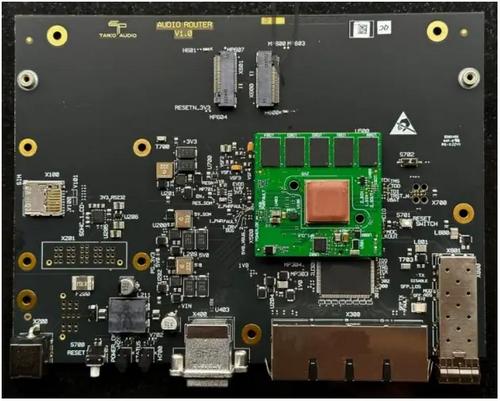
No, the Router has 2 m.2 PCIe slots on board. Adding a cutout for an antenna is no problem.
There seems to be a SIM card slot on the left side of the board?
That slot is indeed for a SIM card, good to have options.
A 4G SIM in the Router’s SIM slot could allow for 100% isolation from the home network. Is this an
option?
Today, you could use any “low-powered” LTE/4G router (with modem build in) and connect to the
Extreme router to obtain the same advantage of isolation from the home network. LTE/4G router - -
Extreme router - - switch - - server. This has been tested some time ago but the router already
provides ample isolation from your home network.
Has a decision been made regarding the integration of an AP into the router in order to have an
all-in-one solution?
This is in the works.
Wifi to be added to the Router (updated implementation 25-05-2023)
We have integrated Wi-Fi working on the routers! This does require a PCB change to work well
which we are now considering to do for 2 reasons. The first one being guaranteed SQ performance,
and yes this is the solution which produces superior results, the second reason is reduced complexity
of setup, in fact it can be virtually as easy to install as the switch, and easier than the switch/network
card bundle.
The downside is the increased BOM (Bill Of Materials), and we already forgot to include a few items
in that meaning we will have to increase the Router price, likely to at least EURO 6600 and possibly a
bit more. But of course, we will honor the EURO 6000 presale price and those who placed presale
orders will get the wi-fi update for free.
Does this separate wifi network sound better than if I used port forwarding and stayed connected
to my main network?
Yes, it does.
Can the wi-fi feature in the future router be disabled?
Yes, it can be removed entirely.
Will you also issue a Router without wifi?
the Extreme Router will only be issued in its definitive form, which is with wifi access point included.
Alas, we will not make the earlier incarnation available to the public.
There was talk of Router Subscription/maintenance cost?
We switched to openwrt, no maintenance cost.
Why not combine Switch and Router in a single chassis?
The thing is EMI/RFI is airborne inside the chassis and can couple back into the circuit, of course you
could create 2 internal chambers, but this would both be about the same size / weight and actually a
bit more expensive, especially for post treatment / finishing and a higher change of transport
damage, especially since customs appears to like to unpack these frequently to check what that
massive blob is showing up on their Xrays.
In case of Extreme sever + Merging NADAC setup via Merging ASIO plugin and an Extreme
Network Card, where should the new Extreme Router be inserted?
The Router should be "in front of" the Extreme, like so: Router -> Extreme -> Switch -> Nadac
Will the router ap be Cat6 or Cat6e?
As things are looking now, neither. We have the following setup running which adds Wi-Fi over USB
at a very low power consumption.

We could integrate this inside the Router chassis, ideally adding an exclusive power
rail/filter/regulator. This is by far the best solution we’ve tested. We’re currently looking at what
that would entail and if we can make this work for the presale batch since it requires ordering new
PCBs (although we can recycle most of the expensive parts).
It looks like we can ship end of July with new PCBs. Wi-Fi would then be integrated into the Router
chassis and management interface. The SQ impact of this Wi-Fi solution is virtually undetectable.
Will the router wifi work with Android?
Yes
If I don’t listen to streaming, I can leave the taiko router unplugged from the main one, right? Will
there be any benefit (sonically) to that?
You could but we feel it’s not worth the hassle.
Is the reason why the router uses ARM 16 cores because the better the performance, the better
the sound?
CPU performance matters but there’s more to it than just that. Somewhat obvious is you want low
utilization so performance is minimally impacted by WAN side traffic and traffic rules processing like
port forwarding. But there’s more which went into the design of the router including the processor
selection which I’m afraid I cannot disclose to avoid being prematurely copied. Prematurely being
before we hit break-even on our R&D costs which might be like a year away. Disclosing this aspect of
the design would take away most of the mystery surrounding the effects of ethernet networking so
I’d really like to share, but in the end, we do have a business to run and have to keep netting
positive. I hope you understand.
What is the optimal configuration?
RJ45 ethernet cable from home router to Taiko router and DAC cable from Taiko router to switch is
optimal. Further improved performance can be obtained by powering both Taiko router and switch
from a single DC power supply using the Taiko DC distributor. Then there’s even more to be gained
by using the upcoming battery supply.
Is there any benefit in using SFP+ over SFP cable?
SFP = 1G
SFP+ = 10G
We supply SFP+. We did not compare the two but the expectation is that they will perform the
same.
What is the master clock frequency of the Taiko router and switch?
25MHz.
Since routers and Access Points generate noise, polluting our home electrical grid network no
matter how many audiophile routers/switches we use for our hi-fi system, I wonder if you could
share some configurations or experience that can reduce this type of interference.

| General | Details |
|---|---|
| Name | FAQs TAP0016 Taiko Audio Extreme Router User Manual |
| Make | FAQs |
| Language | English |
| Filetype | PDF (Download) |
| File size | 0.28 MB |
 (1 votes, average: 5.00 out of 5)
 Loading...
If you have any questions regarding FAQs TAP0016 Taiko Audio Extreme Router User Manual, please ask here and describe the problem in detail.

Cudy WR3000H AX3000 2.5G Mesh Wi-Fi 6 Router Installation Guide

HUAWEI B818-263 4G Prime Router User Guide

Quwireless Digi IX10 5G Antenna for Router Installation Guide

TELTONIKA Networks RUT955 Router Installation Guide

RV Wi-Fi 2024v1 DishyDock Router User Guide

TP-Link TL-WR3002X Wi-Fi 6 Portable Router Installation Guide

ASUS TUF-AX6000 Dual Band WiFi Router User Guide
VEVOR XBJHGYCYSDS643WCHV0 60 Inches 152.4cm Router User Guide

CNCU E550 EasyRoute CNC Router Instructions

Tenda 4G05 Wi-Fi N300 4G LTE Router Installation Guide