
Home > UBIQUITI NETWORKS > UBIQUITI NETWORKS 2.4GHz Air Router User Guide
UBIQUITI NETWORKS 2.4GHz Air Router User Guide










AirRouter User Guide
Chapter 3: AirOS™
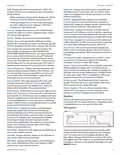
SSID Displays the wireless network name (SSID). The
wireless network name is dependent upon the wireless
mode selected:
WAN/LAN Indicates the current status of the WAN and
LAN Ethernet port connections. This can indicate that a
cable is not plugged into a device and there is no active
Ethernet connection.
• While operating in Station mode, displays the SSID of
the Access Point the AirRouter is associated with.
AP MAC Displays the MAC address of the AirRouter
in Access Point or Access Point WDS mode. In Station or
Stations WDS mode, this displays the MAC address of the
Access Point the AirRouter is associated with.
• While operating in Access Point mode, this displays
the SSID configured on the AirRouter. The SSID is
configured on the Wireless tab.
Connections Displays the number of wireless devices
connected to the AirRouter when the device is operating
in Access Point or Access Point WDS mode. This value is not
displayed while operating in Station or Station WDS mode.
Security Displays the wireless security method being
used on the AirRouter. If None is displayed, then wireless
security has been disabled.
Version Displays the version of the AirOS software.
Noise Floor Displays the current value of the noise level
in dBm. Noise Floor is taken into account while evaluating
the signal quality (Signal-to-Noise Ratio SNR, RSSI).
Uptime This is the total time the AirRouter has been
running since last power up (reboot) or software upgrade.
The time is displayed in days, hours, minutes and seconds.
Transmit CCQ This is an index of which evaluates the
wireless Client Connection Quality. The level is based on
a percentage value where 100% corresponds to a perfect
link state.
Date Displays the current system date and time. The
date and time are displayed in YEAR-MONTH-DAY
HOURS:MINUTES:SECONDS format. The system date and
time is retrieved from the Internet using NTP (Network
Time Protocol). NTP Client is enabled by default on the
Services tab. The AirRouter doesn’t have an internal clock
and the date and time may be inaccurate if NTP Client is
disabled or the AirRouter isn’t connected to the Internet.
TX Rate and RX Rate Displays the current 802.11 data
transmission (TX) and data reception (RX) rate when
operating in Station or Station WDS mode.
Airmax Indicates the AirMax status (Ubiquiti’s proprietary
TDMA polling technology) when operating in Access
Point or Access Point WDS mode. If AirMax is enabled, the
AirRouter will only accept AirMax clients. (Disable AirMax
for legacy 802.11bgn device compatibility). AirMax also
features advanced QoS Autodetection settings.
Channel/Frequency Displays the channel number and
corresponding operating frequency. The AirRouter uses
the channel/radio frequency specified to transmit and
receive data. Valid channel/frequency range will vary
depending on local country regulations.
Airmax Quality This displays the AirMax Connection
Quality. The level is based on a percentage value where
100% corresponds to a perfect link state.
Channel Width This is the spectral width of the radio
channel used by the AirRouter. 5, 10, 20 and 40 MHz
channel spectrum widths are supported. In Station (or
Station WDS) 20/40 MHz is the value by default.
Airmax Capacity This is an index of maximum data
rate the link is operating at. A Lower Capacity number
indicates a unit that is bogging the system down.
ACK/Distance Displays the current timeout value for ACK
frames. ACK Timeout can be set manually or self-adjusted
automatically. The ACK Timeout (Acknowledgement frame
Timeout) specifies how long the AirRouter should wait for
an acknowledgement from a partner device confirming
packet reception before concluding there must have been
an error and resending the packet.
Monitor
There are various monitoring tools accessible via the links
on the Main tab. The default selection is Throughput which
is displayed as soon as you open the Main tab.
Throughput
TX/RX Chains Displays the number of independent
spatial data streams the AirRouter is transmitting/
receiving simultaneously within one spectral channel
of bandwidth. This ability is specific for 802.11n devices
which rely on multiple-input multiple-output (MIMO)
technology. Multiple chains increase data transfer
performance significantly. The number of chains Ubiquiti
device uses is hardware specific. Every TX/RX chain
requires a separate antenna.
WLAN MAC Displays the MAC address of the AirRouter as
seen on the wireless network.
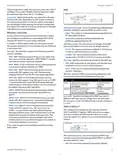
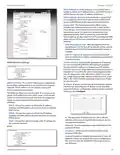
Shows a visual representation of the current data traffic
on the LAN and WLAN in both graphical and numerical
form. The chart scale and throughput dimension (Bps,
Kbps, Mbps) changes dynamically according to the mean
throughput value. The statistics are updated automatically.
Throughput statistics can be updated manually using the
Refresh button.
LAN MAC Displays the MAC address of the AirRouter as
seen on the LAN (Local Area Network).
WAN MAC Displays the MAC address of the AirRouter as
seen on the WAN interface. This is the AirRouter’s MAC
address that is seen over the Internet.
Ubiquiti Networks, Inc.
5

| General | Details |
|---|---|
| Name | UBIQUITI NETWORKS 2.4GHz Air Router User Guide |
| Make | UBIQUITI NETWORKS |
| Language | English |
| Filetype | PDF (Download) |
| File size | 5.15 MB |
 (1 votes, average: 5.00 out of 5)
 Loading...
If you have any questions regarding UBIQUITI NETWORKS 2.4GHz Air Router User Guide, please ask here and describe the problem in detail.

UBIQUITI NETWORKS ER-12 10 Port Gigabit Router User Guide


TP-Link Tri-Band Wi-Fi 6E Router User Guide

LINOVISION IOT-R41 Mini 4G LTE Router User Manual

ASUS GT-AX11000 Pro ROG Rapture Tri-band Gaming Router User Guide

Cudy P4 Dual Band Whole Home Mesh Wi-Fi Router Installation Guide

ZTE E3330 WiFi 6 Wireless Router User Manual

ASUS RT-AX88U Pro AX6000 Dual Band WiFi Router User Guide

ASUS BE14000 Tri Band WiFi Router User Guide

AKYPACH A2 Wood Router Tool Compact Trim Router Instruction Manual

levelone WGR-8031 AC1200 Dual Band Wireless Gigabit Router Owner’s Manual

cradlepoint S5A245A Router User Guide